



Our Sauna Blog, Sauna
Best Home Sauna Kits: How to Choose the Right Sauna Kit for Your Home
Dec
Buying a home sauna kit is one of the smartest ways to bring authentic sauna heat into your space without wrestling with the complexity of a full custom build. A well-designed kit arrives pre-cut, pre-drilled, and engineered so you can actually assemble it in a weekend, not spend months sourcing lumber and second-guessing measurements.
But here’s the thing: not all sauna kits deliver the same performance, longevity, or comfort. Understanding what separates a solid kit from one that’ll frustrate you for years means looking past the marketing and into the structural, thermal, and functional details that determine how your sauna actually performs.
This guide breaks down what matters most when you’re evaluating home sauna kits. Whether you’re setting up indoors or outdoors, choosing between traditional heat and infrared, or selecting between a cozy two-person unit and a spacious family-sized cabin, the following sections help you identify the features that match your goals and budget.
But before we get started…
What Makes a Home Sauna Kit the Best Choice?
A home sauna kit eliminates the guesswork involved in sourcing materials, calculating dimensions, and managing construction logistics. The best kits are engineered systems. They arrive with precision-milled panels that interlock cleanly, pre-routed ventilation channels, and hardware tested for the thermal expansion and contraction your sauna will undergo. This reduces installation time and minimizes the risk of structural issues arising from improvised assembly.
Pre-fabrication also means consistency. When tongue-and-groove panels are milled to exact tolerances, they fit tightly with no gaps that let heat escape. Doors align properly, glass panels seal without leaks, and benches sit level. These details matter because a sauna operates in an extreme environment. A kit that’s been designed with these stresses in mind will outlast a DIY build that relies on trial and error.
Cost efficiency is another advantage. Premium kits carry higher upfront costs than raw lumber, sure. But they eliminate waste and reduce the labor hours you’d otherwise spend cutting, sanding, and troubleshooting fit issues. The time savings alone can justify the investment, especially if you value your weekends or don’t have advanced carpentry skills. Plus, many kits include essential components like heaters, rocks, vents, and lighting you’d otherwise need to source separately and verify for compatibility.
Key Features Buyers Should Look For
1. Ventilation System
Proper ventilation separates a functional sauna from one that feels stifling or can’t maintain consistent heat. A well-designed ventilation system introduces fresh air near the heater, allows it to warm and rise, then channels it through the cabin before it exits near the floor. This creates a continuous airflow loop that prevents stagnant pockets of cooler air near your feet and overheated zones near the ceiling.
Most quality sauna kits include pre-cut intake and exhaust vents to ensure proper airflow. The intake vent sits low on the wall near or behind the heater, drawing in fresh oxygen that the heater immediately warms. The exhaust vent usually goes on the opposite wall near the floor, allowing cooler, oxygen-depleted air to exit.
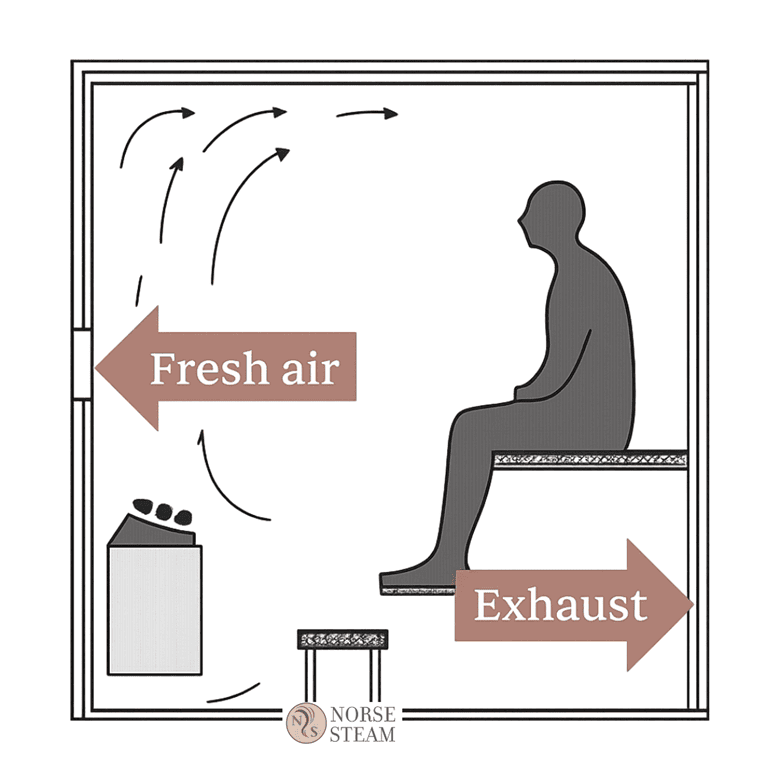
This cross-ventilation setup keeps the entire cabin breathable while sustaining high temperatures.
2. Sauna Heaters and Placement
The heater is the heart of your sauna. Its compatibility with the cabin’s size, insulation, and how you plan to use it determines how efficiently the space heats and how evenly that heat distributes.
For traditional saunas, heater sizing is critical. An undersized heater struggles to reach target temperatures, especially in larger cabins or those with poor insulation. An oversized heater cycles on and off too frequently, and this reduces the component lifespan and creates uneven heat.
A rule of thumb is to use 1 kilowatt of heater capacity per 45 to 50 cubic feet of interior space. A 6kW heater, for example, works for a cabin with roughly 270 to 300 cubic feet. But always verify that the kit’s recommended heater matches the cabin’s cubic footage, ceiling height, wall thickness, and features such as glass doors that increase thermal load.

Where you place your heater inside the sauna also matters. Heaters positioned too close to benches create uncomfortably hot zones that force you to sit farther from the heat source. Heaters placed too far from the intake vent don’t benefit from the fresh-air supply, which reduces efficiency and airflow quality. Ultimately, the sauna heater should be below the sauna benches, just like this:
3. Wood Type
The wood species used in your sauna kit affects durability, heat retention, aesthetic appeal, and the amount of maintenance you’ll need. Usually, there are three main types of wood you’d find in a sauna: alder, aspen, cedar, and Nordic Spruce (often thermally modified). Each has distinct performance characteristics.
-
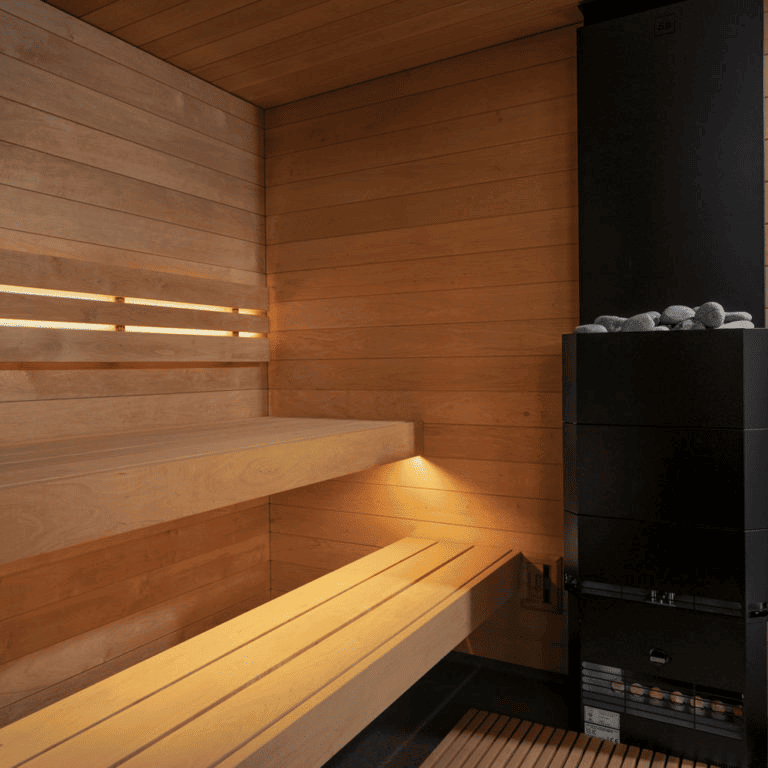
Thermo-Aspen
Thermo-aspen is stable, splinter-resistant, and resin-free. The thermal modification process gives it a rich, caramel-brown tone while improving its durability. It remains comfortable to the touch at high temperatures, making it one of the best materials for benches and interior paneling.
-
Thermo-Alder
Thermo-alder develops a deep, warm coloration and becomes more moisture-resistant than untreated alder. It stays smooth under heat, has minimal resin content, and is highly resistant to warping. Its refined appearance and structural consistency make thermo-alder a popular choice for premium indoor sauna interiors.
-
Thermo-Cedar
Cedar is already naturally resistant to decay, but thermal modification enhances its stability and further reduces moisture absorption. Thermo-cedar retains cedar’s classic aromatic qualities, though often mellowed by the heat treatment, and stays cool to the touch during sessions. It is beautiful, lightweight, and well-suited for both benches and wall cladding.
4. Bench Layout
Bench design affects comfort, capacity, and how you’ll actually use your sauna. The best kits provide multiple bench levels, typically two or three tiers, to allow you to choose your preferred heat intensity. Heat rises, so the upper bench experiences the highest temperatures while the lower bench stays cooler. This tiered arrangement accommodates people with varying heat tolerances and allows them to lie down on the upper bench or sit upright on the lower bench.
This is how the tiered layout looks:
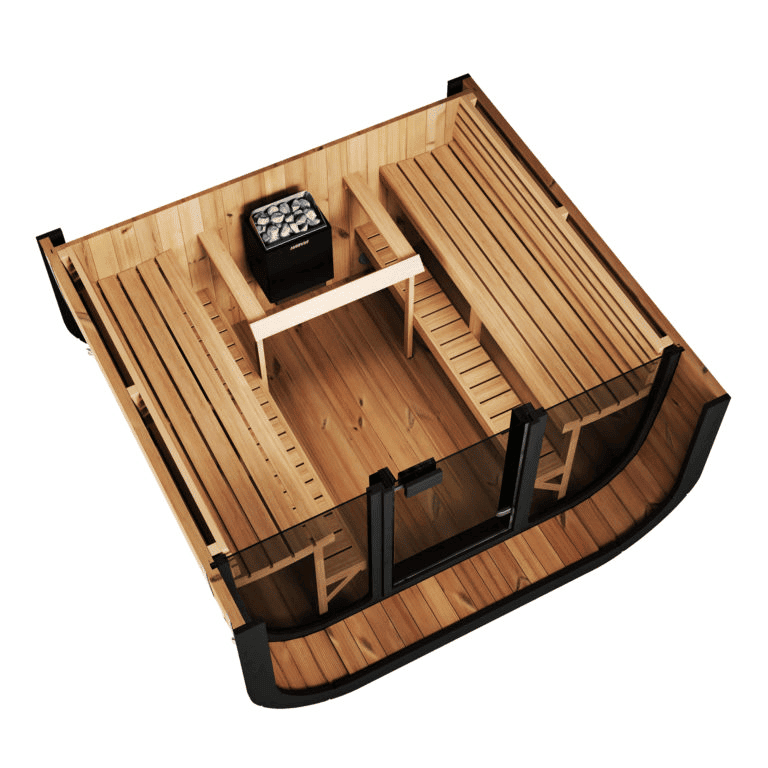
Because both heat and löyly (the steam released when water hits the stones) rise and collect near the ceiling, the hottest, richest steam forms a “löyly pocket” in the upper part of the sauna. When benches are tiered and positioned above or level with the top of the heater, bathers on the upper bench are physically sitting inside this pocket, where the temperature and steam concentration are highest.
Now let’s get into the fun part!
Best Home Sauna Kits (Top Picks Buyers Should Compare)
1. Best Overall Home Sauna Kit: SaunaLife CL3G
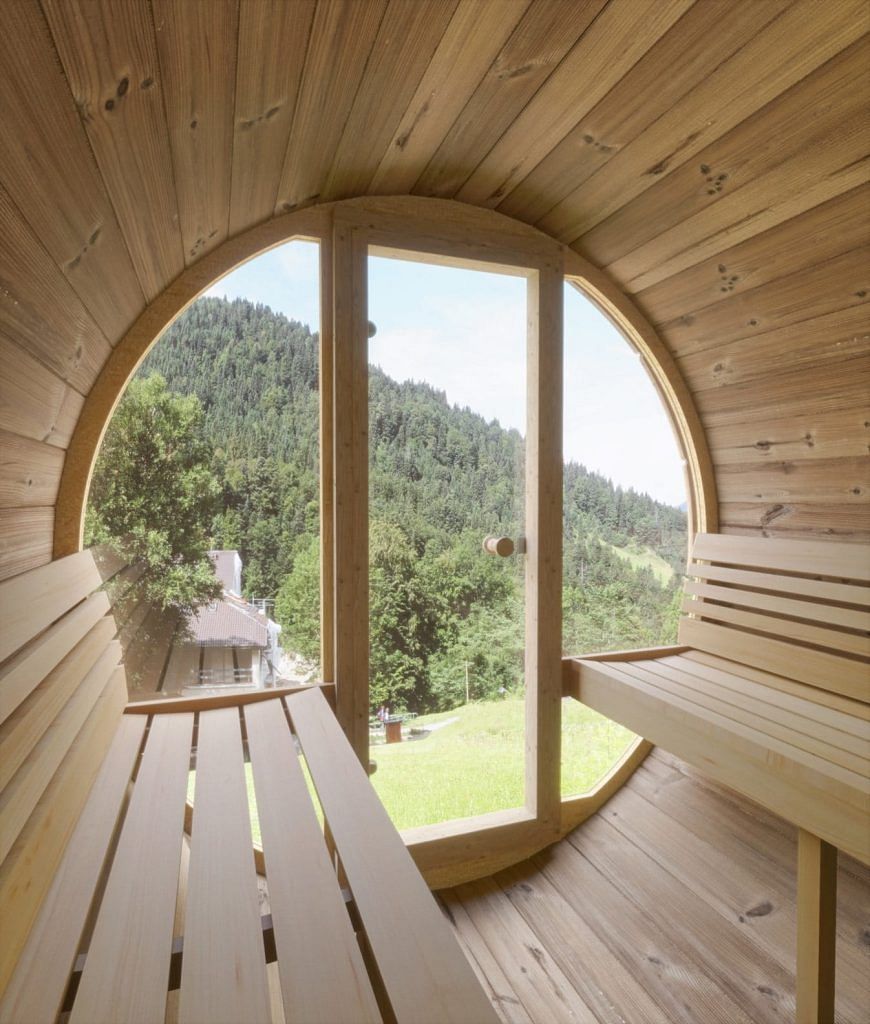
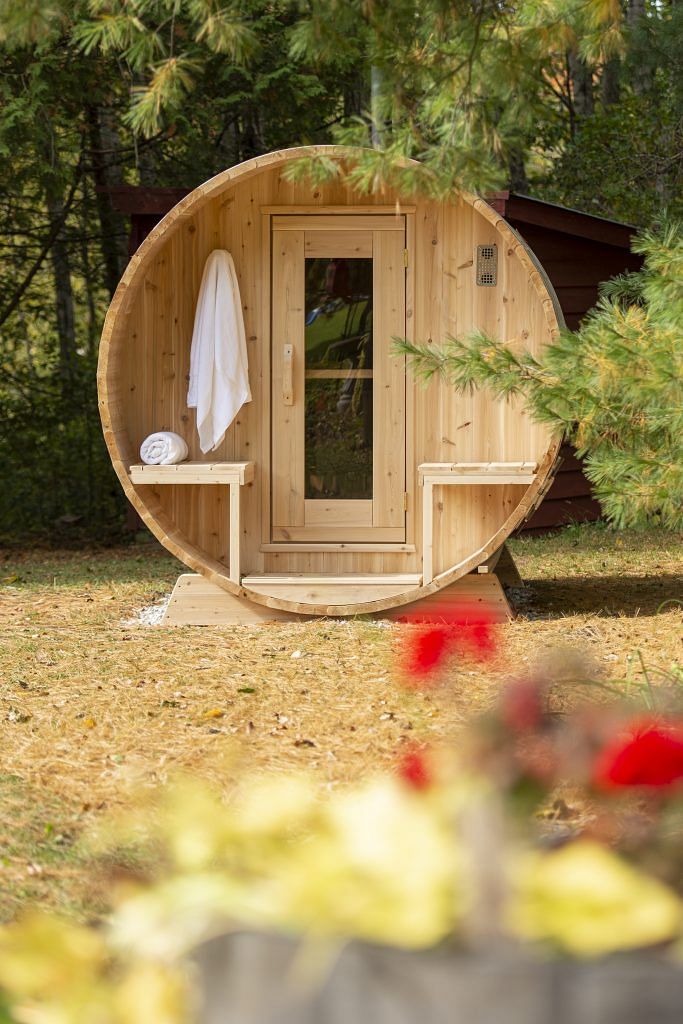
The SaunaLife CL3G is our “best overall” pick and for good reason. It’s a compact, well-engineered outdoor sauna comfortably seating two to three users, making it ideal for couples or small households. The structure features a clean Scandinavian design with vertical spruce cladding, minimalist lines, and high-quality craftsmanship that feels both modern and traditional. Here’s how it looks:
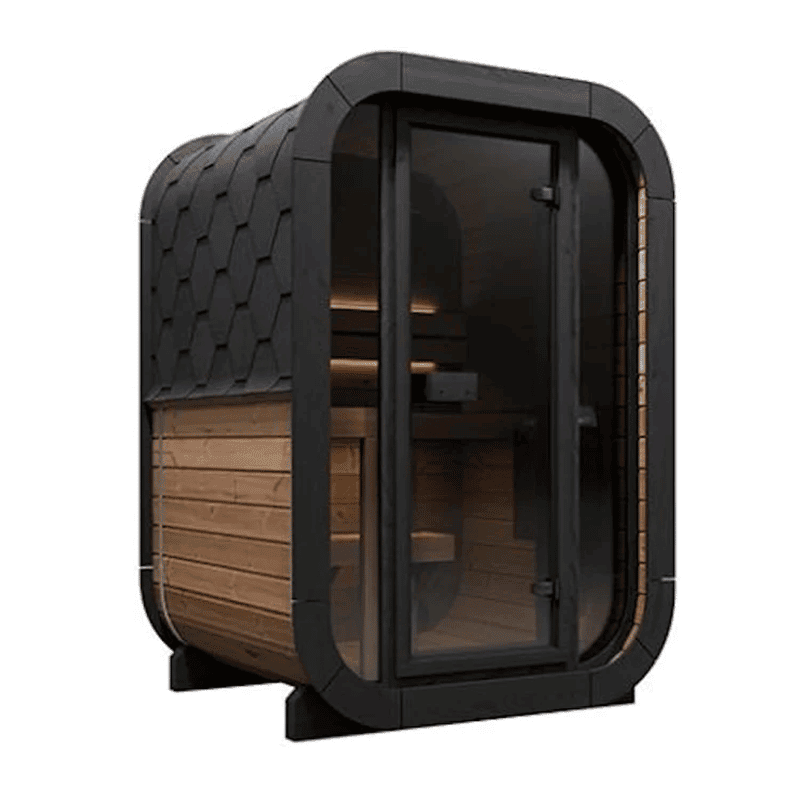
One of its standout qualities is its hybrid shape, a unique blend of barrel and cube design. You get the efficient heat circulation and cozy curvature associated with barrel saunas, combined with the stable walls, spacious interior, and clean, architectural look of a cube. This fusion creates excellent thermal performance while still offering a visually striking, contemporary profile.
And despite its compact footprint, the CL3G is thoughtfully laid out with multi-level benches that place bathers directly in the optimal löyly pocket for rich, immersive steam.
Some users complain that the sauna isn’t spacious enough, but the glass front eliminates any claustrophobic feeling. Instead of feeling enclosed, the space feels open and airy. The expansive glazing also blurs the boundary between indoors and outdoors, allowing you to enjoy the natural ambiance of your surroundings as you bathe.
Key Specs:
- Capacity: 2-3 people
- Wood: Thermally modified Nordic Spruce
- Heater: 6kW electric (HUUM or Harvia heaters work fine)
- Aesthetics: Full glass front
Pros:
- An efficient barrel design minimizes heat loss
- Thermally modified wood resists moisture and warping
- Full-glass door increases visibility and perceived space
- Compact footprint fits smaller outdoor areas
- Pre-wired heater and controls reduce installation complexity
Cons:
- Limited capacity, not suitable for families larger than two
- Barrel design offers less headroom than cabin-style saunas
Who it’s for:
Couples or small households prioritizing space efficiency and energy performance. Perfect if you’ve got limited outdoor space but still want a traditional sauna experience without the footprint of a larger cabin.
Score: 9.2/10
2. Best Mid-Size Outdoor Sauna: SaunaLife CL4G
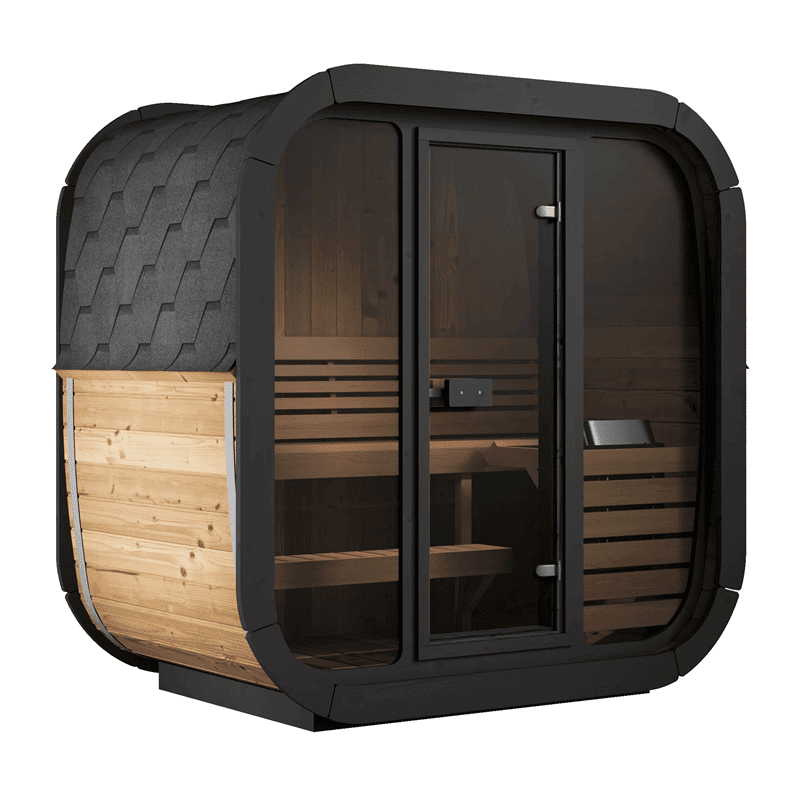
The CL4G expands on the barrel concept with a longer profile that comfortably accommodates three users. At 8 feet in length, it provides enough bench space for two people to lie flat on the upper tier while two others sit on the lower bench. The extended length also allows for a more spacious interior without increasing the diameter, which keeps the cabin’s thermal efficiency high.
Like the CL3G, the CL4G uses thermally modified Nordic Spruce and includes a 6kW heater, though you can upgrade to an 8kW model if you prefer faster heat-up times or plan to use the sauna in colder climates. The cabin features two-tier bench seating, adjustable vents, and an insulated roof that reduces heat loss through the top.
Key Specs:
- Capacity: 4 people
- Wood: Thermally modified Nordic Spruce
- Heater: 6kW
- Aesthetics: Full glass front
Pros:
- The extended length provides lying space on the upper bench
- Two-tier seating accommodates users with different heat preferences
- Barrel design maintains efficient heat distribution
- An insulated roof reduces heat loss and improves energy efficiency
Cons:
- Heavier than the CL3G
- Barrel shape limits standing headroom in the lower bench area
- A glass door can fog during use
Who it’s for:
Small families or couples who regularly entertain guests. Works well if you want the efficiency of a barrel design but need additional capacity for social use.
Score: 9.4/10
3. Best Sauna Kit for Families: SaunaLife CL5G
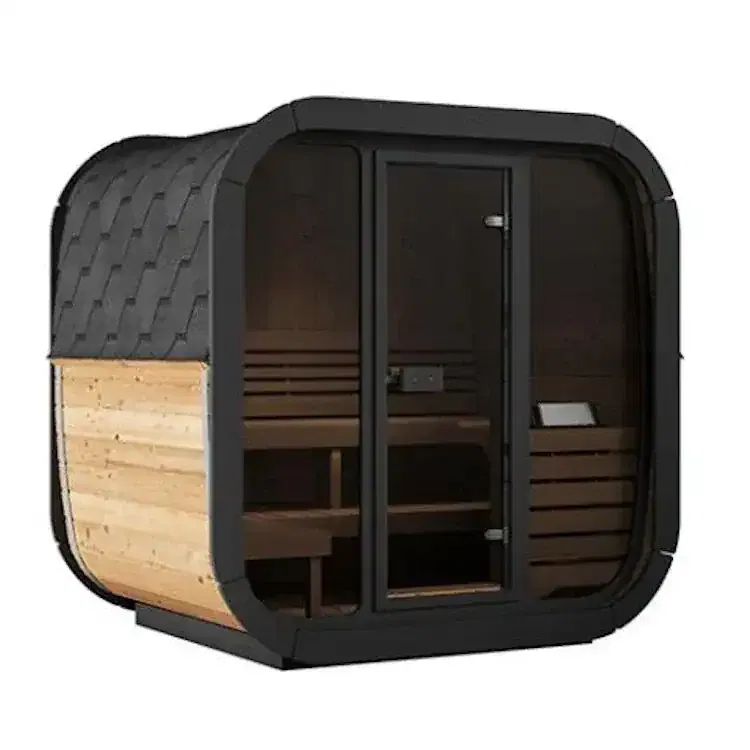
If you have a mid-sized family and are looking for a sauna that’ll accommodate up to four people comfortably, the SaunaLife CL5G is an excellent choice. This sauna features two-tiered benches that give everyone room to sit or recline while still placing bathers at different heat levels for personalized comfort. The upper bench offers access to the richer löyly and higher temperatures, while the lower bench provides a gentler experience – an advantage if you have kids and don’t want them to sit in the high heat.
In terms of aesthetics, you’ll love that CL5G embraces a modern cube design paired with a striking full-glass front that instantly elevates any backyard. The expansive glazing eliminates any sense of being boxed in and allows natural light and outdoor scenery to become part of the experience. Whether you’re overlooking a garden, forest, or patio, the view creates a calming, immersive environment that feels more like a private spa than a traditional sauna shed.
Key Specs:
- Capacity: 4 people
- Wood: Thermo-Spruce and thermo-aspen
- Heater: 6kW electric, 240V
- Assembly time: 10 – 12 hours (2-3 people)
Pros:
- Cabin design provides full standing headroom
- Three-tier bench seating accommodates users of all ages
- The modular panel system allows for customization and future upgrades
- An insulated peaked roof reduces heat loss through the top
Cons:
- A larger footprint requires more outdoor space
- Heavier structure requires a solid foundation (concrete pad or reinforced deck)
Who it’s for:
Families with children or multi-generational households. Perfect if you prioritize interior space, flexibility, and the aesthetic and aromatic qualities of Western Red Cedar.
Score: 9.6/10
4. Best Sauna Kit for Larger Groups: SaunaLife CL7G 6 Person Outdoor Cube Sauna
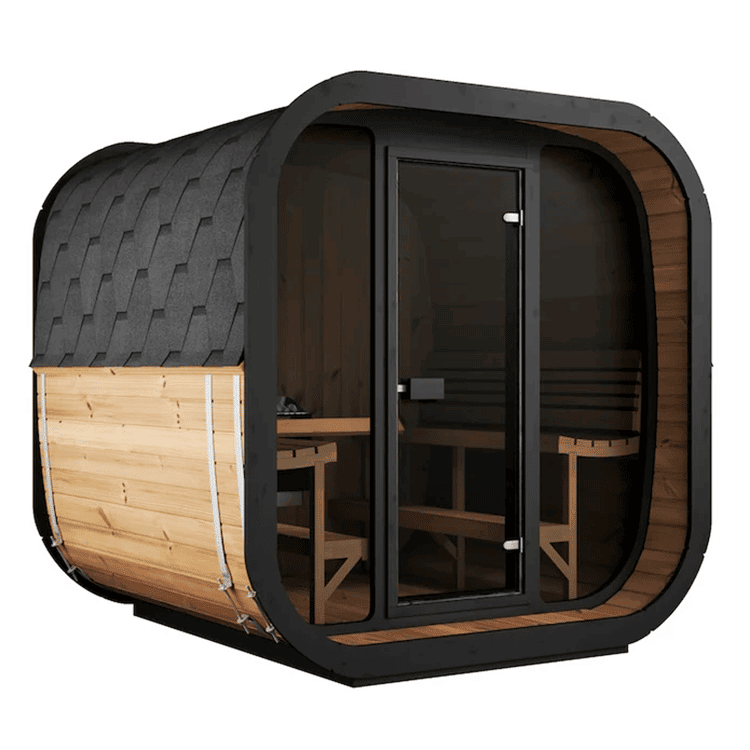
The CL7G is another spacious sauna that can accommodate up to six (6) bathers at a time without feeling cramped. It comes with two benches arranged in a 2-tier seating layout. What’s better? There is an upper bench and a lower bench to seat more people.
One thing we also love about the CL7G model is its built-in comfort features, though these are present in all SaunaLife cube models. The benches are crafted from satin-smooth thermo-aspen, a wood with excellent thermal stability, so they stay comfortable to sit on even during long, high-heat sessions. Each seating area also includes ergonomic backrests that make it easy for you to relax fully while you enjoy the heat.
Key Specs:
- Capacity: 6 people (but 5 comfortably)
- Wood: thermo-spruce and aspen.
- Heater: 8kW – 9kW electric, 240V
- Assembly time: underway in 2 hours
Pros:
- Spacious L-shaped bench layout accommodates groups comfortably
- Full-glass front wall creates an open, inviting interior
- Dual intake vents improve airflow and heat distribution
- A steeply pitched roof increases ceiling height and prevents heat concentration
- Bolted frame system provides structural stability over time
Cons:
- Large footprint limits placement options in smaller yards
- The glass front wall requires regular cleaning to maintain clarity
- The assembly requires three people and takes a full day
Who it’s for:
Anyone who regularly hosts gatherings or wants a sauna large enough for extended family use. Best suited if you’ve got ample outdoor space and are willing to incur higher operating costs for a premium social experience.
Score: 9.5/10
5. Best Luxury Sauna Kit: SaunaLife CL12G 8 Person Outdoor Sauna
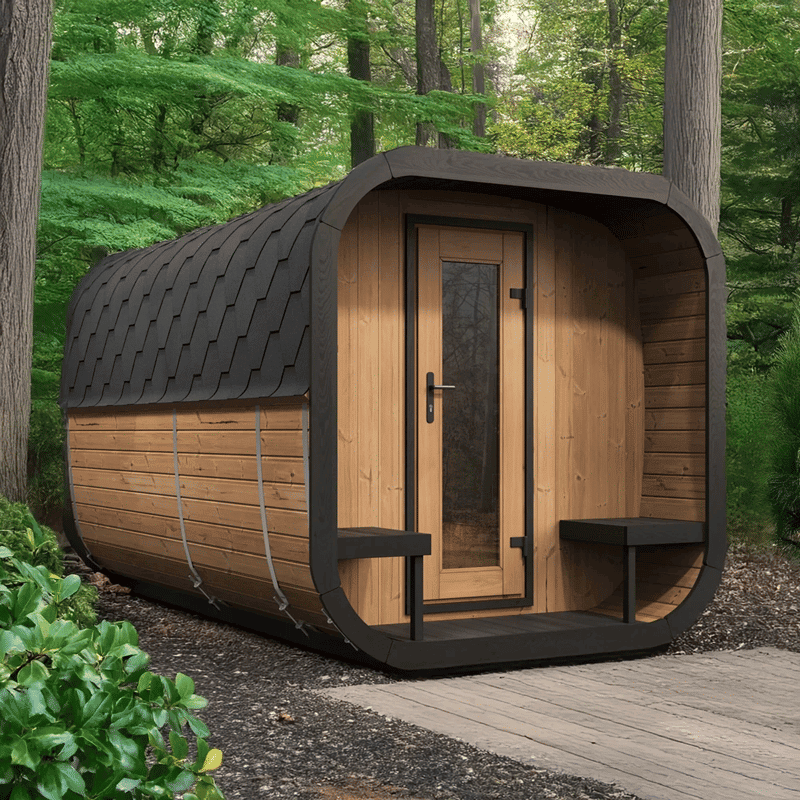
We’re not trying to hardsell SaunaLife (this is the last one, promise), but couldn’t miss the opportunity to highlight the CL12G as the ultimate choice for those seeking a premium, full-featured sauna experience. The sauna is designed to accommodate up to eight people, making it ideal for families, social gatherings, or anyone looking to host group sauna sessions in comfort and style.
Just like the other four models we mentioned earlier, the CL12G also features SaunaLife’s signature craftsmanship, a premium Thermo-Spruce exterior, and smooth Thermo-Aspen interior benching. But the best part is that you get a separate changing room and a front porch, which is a huge advantage if you plan to use it for commercial purposes or expect multiple people to come and go during a session.
The changing room provides a private space to dress, store belongings, or cool down between rounds, while the porch creates a welcoming transition zone, perfect for relaxing, socializing, or enjoying fresh air before heading back into the heat.
Key Specs:
- Capacity: 8 people (sauna chamber only)
- Wood: Robust thermo-spruce exterior with thick staves
- Heater: 8kW electric, 240V
- Assembly time: 1-2 days
Pros:
- An integrated changing room adds functionality and convenience
- High-capacity heater ensures fast heat-up even in a large space
- Chromotherapy lighting and sound system options enhance the experience
- A shingled roof provides residential aesthetic and weather protection
Cons:
- Highest price point among pre-engineered kits
- Requires substantial foundation (reinforced concrete or engineered deck)
Who it’s for:
Anyone seeking a luxury sauna experience with commercial-grade features. Perfect for properties with dedicated wellness spaces or for those who prioritize entertaining and long-term investment in home value.
Score: 9.8/10
6. Best Hybrid Sauna Kit: Finnmark FD-2 Sauna
The Finnmark FD-4 Trinity is one of the most versatile 2-person saunas on the market. This sauna offers three heating technologies in a single compact footprint! If you’re torn between infrared therapy, red-light therapy, and traditional steam sauna heat, this hybrid unit eliminates the need to choose. It’s designed for users who want maximum flexibility without sacrificing build quality, performance, or comfort.
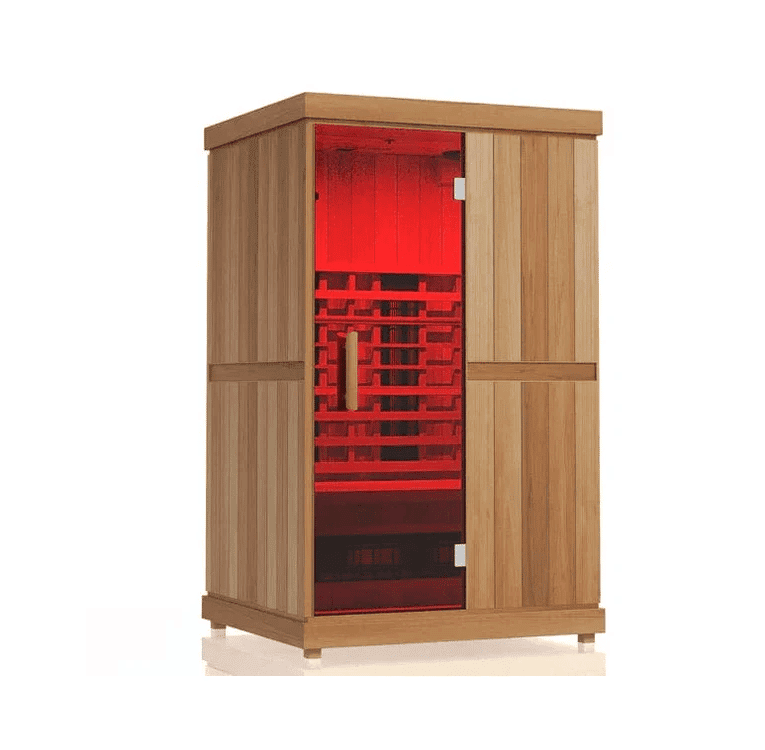
What makes the FD-4 so impressive is how seamlessly it blends these technologies. The short-wave, low-EMF infrared heaters provide deep, therapeutic heat for muscle recovery and detoxification. For mood enhancement and skin health, you can switch to the integrated Spectrum Red Light™ system. Or, when you want the classic Finnish experience with steam and higher temperatures, the traditional heater with stones delivers a satisfying, authentic hot-room environment.
Beyond heat performance, the FD-4 shines in craftsmanship and materials. The exterior is built from Thermo-Aspen, known for its stability and resistance to warping, while the Western Red Cedar interior offers a naturally antimicrobial, aromatic environment that stays hygienic over years of use. A two-tier bench layout also offers multiple seating options, allowing you to adjust your heat exposure even in a compact cabin.
Key Specs:
- Capacity: 2 people
- Wood: Thermo-Aspen and Western Red Cedar
- Weight: Approximately 437 lbs
- Assembly time: less than a day
Pros:
- A hybrid system offers flexibility between traditional and infrared heat
- Low-EMF infrared panels provide therapeutic benefits
- Compact footprint suits indoor installations
- Digital controls allow independent adjustment of heat sources
- Pre-cut ventilation ports simplify HVAC integration
Cons:
- Lower maximum temperature than dedicated traditional saunas
- Infrared panels require periodic inspection and cleaning
Who it’s for:
Couples or solo users who want a premium, compact sauna that fits easily into a home, apartment, or wellness room.
Score: 9.1/10
Final Buying Guide: How to Pick the Best Sauna for Your Home
Selecting the best sauna kit means balancing performance, budget, space, and long-term goals. Start by defining your priorities: Do you value traditional heat or infrared therapy? Will you use the sauna solo or with family and guests? Are you installing indoors or outdoors?
Once you’ve clarified your priorities, evaluate kits based on the features we’ve covered – ventilation design, heater compatibility, wood quality, and bench layout. Verify that the kit’s specifications match your space constraints and electrical capacity. Request detailed assembly instructions and make sure customer support is available if you run into issues during installation.
Finally, look at the manufacturer’s reputation and warranty. Established brands with responsive customer service and comprehensive warranties provide peace of mind, especially for first-time buyers. A sauna is a long-term investment, so choose a kit that’s engineered to perform reliably for decades, not just the first few seasons.
Still not sure which to choose? Contact us or check out our top sauna kits.
FAQs
What size home sauna do I need?
Sauna size depends on three things:
- How many people will use it regularly?
- Whether you plan to lie down during sessions, and
- The space you’ve got available for installation.
A two-person sauna measures 4 to 5 feet by 5 to 6 feet, and provides enough bench space for two people to sit comfortably. If you want to lie flat, you’ll need a cabin at least 6 feet long.
Ceiling height matters too. A minimum of 6.5 feet is necessary for comfortable standing and movement, though 7 to 7.5 feet is better for taller users. Remember that heat rises, so higher ceilings require more energy to maintain target temperatures in the upper bench area.
Is a 2-person sauna enough for most homes?
For couples or individuals who primarily use the sauna alone, a 2-person unit is sufficient and often preferable because of its smaller footprint and faster heat-up time. But if you occasionally host guests or have kids who want to join sessions, a 2-person sauna will feel cramped. Think about whether you’ll use the sauna socially or as a solo wellness tool.
Do I need an electrician to install a sauna heater?
Yes, you need an electrician to install a sauna heater, and here’s why:
Installing this circuit means running new wiring from your electrical panel to the sauna location, along with a properly rated breaker and disconnect switch. A licensed electrician must perform this work to comply with local electrical codes and ensure safe operation. Attempting to install a sauna heater on an existing circuit or without proper wiring can result in tripped breakers, overheated wires, or fire hazards.
What is the difference between infrared and traditional sauna heat?
Traditional saunas use electric or wood-fired heaters to warm the air, creating a high-temperature environment (160-190°F) with low humidity. You can increase humidity by ladling water onto heated rocks, creating bursts of steam. The high heat causes your body to sweat profusely, promoting detoxification and cardiovascular benefits.
Infrared saunas use infrared panels that emit wavelengths of light absorbed directly by your skin and underlying tissues. The air temperature stays lower (120-140°F), making infrared sessions more comfortable if you find traditional heat too intense. Infrared heat penetrates deeper into tissues, which some people find beneficial for muscle recovery and joint pain. However, infrared saunas don’t provide the same intense sweating or cardiovascular response as traditional saunas.
Hybrid saunas combine both systems, letting you switch between traditional and infrared heat or use both simultaneously.
Can I install a sauna indoors or outdoors?
Yes, both options work, but each has specific requirements. Outdoor saunas need a level, stable foundation, typically a concrete pad, reinforced deck, or compacted gravel base. The foundation must support the sauna’s weight (which can exceed 2,000 lbs for larger units) and provide drainage to prevent water pooling.
Indoor saunas require adequate ventilation to prevent moisture buildup in surrounding rooms. Most indoor installations connect the sauna’s exhaust vent to the home’s HVAC system or install a dedicated exhaust fan. Basements are common indoor locations because of their concrete floors and proximity to electrical panels, but spare rooms, garages, and dedicated wellness spaces also work if properly prepared.
Do sauna kits come ready-to-use?
Most kits include the sauna structure, heater, rocks, and basic accessories such as a thermometer and a bucket. However, you’ll need to provide the electrical connection (installed by an electrician), the foundation or platform, and any additional accessories, such as upgraded lighting or sound systems. Some manufacturers offer turnkey packages that include delivery, foundation preparation, assembly, and electrical hookup, though these packages cost significantly more than DIY kits.
Which type of sauna offers the best sauna experience?
“Best” is subjective and depends on what you’re after. Traditional saunas offer the authentic Finnish experience – high heat, low humidity, and the option to create steam by ladling water onto hot rocks. They provide intense cardiovascular stimulation and profuse sweating. Infrared saunas offer a gentler heat that’s easier to tolerate during longer sessions, with deeper tissue penetration that some users find therapeutic. Hybrid saunas provide flexibility, letting you choose between traditional and infrared heat based on your mood or health goals.
